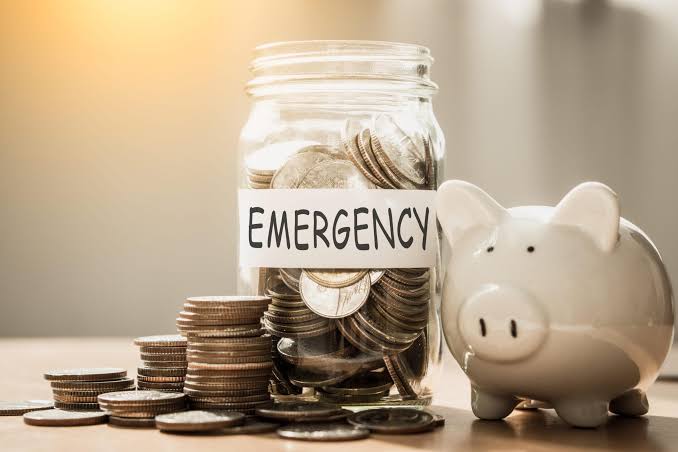
An emergency fund is the single most important money cushion you can build, and yet it is the one most people put off. A surprise car repair, a medical bill, a reduced paycheck, or an unexpected layoff can turn a stable month into a stressful one in a matter of days. The good news is that building this safety net is not complicated. You do not need a finance degree, a high income, or perfect discipline. You need a clear target, a place to keep the money, and a simple system that keeps you moving forward even when life gets busy.
This guide walks through exactly how much to save, where to keep it so it actually earns something, and how to build the habit without feeling deprived. Whether you are starting from zero or rebuilding after dipping into your savings, the plan below is designed to be realistic for ordinary budgets in 2026.
How Much Should You Actually Save?
The classic rule of thumb is to save three to six months of essential expenses. That range is a starting point, not a law. The right number for you depends on how steady your income is, how many people rely on it, and how quickly you could replace it if it disappeared.
Notice the word essential. Your emergency fund is not meant to cover your normal lifestyle in full. It is meant to cover the bills you cannot skip: rent or mortgage, utilities, groceries, insurance, minimum debt payments, transportation, and basic necessities. Dining out, streaming subscriptions, and vacations are the first things that would pause during a genuine emergency, so they do not belong in the calculation.
A quick way to find your number
Add up one month of your essential spending. If your must-pay bills come to roughly $3,000 a month, then a three-month fund is $9,000 and a six-month fund is $18,000. Those totals can feel intimidating when you are staring at them all at once, which is exactly why you should not treat the full amount as your first goal.
Instead, break it into stages that each deliver real peace of mind:
- Stage 1 — Starter buffer ($500 to $1,000). This first small cushion is the most valuable dollar-for-dollar money you will ever save, because it stops small emergencies from turning into credit card debt. Most minor surprises fall under $1,000.
- Stage 2 — One month of essentials. Reaching a single month of expenses is a psychological turning point. It means a late paycheck or a slow week no longer creates panic.
- Stage 3 — Three to six months. This is the full safety net that protects you through a job loss or a major life disruption.
Certain situations call for aiming toward the higher end of the range, or even beyond it. If you are self-employed, work on commission, are the sole earner for your household, or work in an industry with frequent layoffs, more cushion is wise. If you have very stable dual incomes and low fixed costs, the lower end may be perfectly reasonable. The goal is not to hit a magic number that a stranger on the internet picked for you. It is to reach the amount that lets you sleep at night.
One more consideration for 2026: prices for everyday essentials have shifted over the past few years, so a target you set a while ago may now be too low. It is worth recalculating your monthly essentials at least once a year, or after any big change such as a move, a new baby, or a new job.
Where to Keep Your Emergency Fund
Once you know your target, the next question is where the money should live. This matters more than most people realize, because the account you choose affects both how much your savings grow and how tempted you are to spend it.
Your emergency fund needs three qualities. It should be safe, meaning the balance will not drop because of market swings. It should be liquid, meaning you can access it within a day or two without penalties. And ideally it should earn a competitive return, so inflation does not quietly erode its value while it sits there.
The strong option: a high-yield savings account
For most people, a high-yield savings account (often called an HYSA) hits all three marks. These are typically offered by online banks and, as of July 2026, the most competitive ones pay in the neighborhood of 4% or higher in annual percentage yield. Compare that to the national average savings rate, which sits around just 0.38% according to FDIC data reported by NerdWallet. That gap is enormous. On a $10,000 balance, the difference between a rock-bottom rate and a top rate can be several hundred dollars a year, essentially free money for keeping your fund in the right place.
Rates do move over time. In mid-2026 they have been trending slightly downward, so the exact number you see when you open an account may differ from the headline figures. Even so, a high-yield account will almost always beat the near-zero rate on a traditional big-bank savings account. As long as the bank is FDIC insured, your deposits are protected up to $250,000 per depositor, per institution.
Other places people consider
A money market account works similarly to a high-yield savings account and sometimes comes with check-writing or a debit card, which can be convenient. Just watch for minimum balance requirements. Some savers build a short “CD ladder,” but keep in mind that certificates of deposit lock your money up for a set term, so they suit only the portion of your fund you are confident you will not need soon.
It is just as important to know where your emergency fund should not live. Avoid keeping it in your everyday checking account, where it blends in with spending money and quietly disappears. Avoid tying it up in the stock market, because the moment you need cash is often the same moment the market is down, forcing you to sell at a loss. And avoid parking it somewhere too easy to raid on impulse, such as an account linked directly to your debit card for daily purchases. A little friction between you and the money is a feature, not a flaw.
How to Build the Habit Without Feeling Broke
Knowing your target and choosing an account are the easy parts. The real work is consistently moving money into the fund month after month. The savers who succeed are rarely the ones with the most willpower. They are the ones who removed willpower from the equation entirely by automating the process.
Automate first, budget second
Set up an automatic transfer from your checking account to your savings account on the day after each payday. Even a modest amount, transferred before you have a chance to spend it, adds up faster than you expect. Saving $50 a week reaches $2,600 in a year without a single active decision. When the money moves on its own, you are far less likely to talk yourself out of it, and you quickly learn to live on what remains.
If you get paid through direct deposit, you may be able to split it so a fixed amount lands in savings automatically before you ever see it in checking. Money you never touch is money you never miss.
Find the money without a painful budget
You do not have to overhaul your entire life to fund your safety net. Small, sustainable adjustments tend to last longer than dramatic ones. A few practical places to look:
- Redirect windfalls. Tax refunds, work bonuses, cash gifts, and rebates are perfect for the emergency fund because you were not relying on them for daily bills.
- Review recurring subscriptions. Most households pay for at least one or two services they have forgotten about. Cancelling them and redirecting the money is painless.
- Bank the difference when a bill drops. If you refinance, switch providers, or pay off a loan, keep sending that old payment amount to savings instead of absorbing it into spending.
- Save any raise. When your income rises, move the extra straight into savings before your lifestyle expands to match it.
Protect the fund, and replace what you use
An emergency fund only works if you reserve it for true emergencies. A genuine emergency is urgent, necessary, and unexpected: a job loss, an essential home or car repair, an urgent medical need. A great deal on a TV, a last-minute trip, or the holidays you knew were coming do not qualify. For predictable but irregular costs like gifts or annual insurance premiums, it helps to keep a separate “sinking fund” so you are not tempted to dip into your safety net.
When you do have to use the fund, that is not a failure. That is the entire point. It did its job. The only step that matters afterward is to restart your automatic transfers and rebuild the balance, treating replenishment as a temporary priority until you are back to your target.
Finally, do not wait until every other part of your finances is perfect before you begin. You can build a starter emergency fund at the same time you chip away at debt. In fact, that small buffer is what keeps a surprise expense from sending you deeper into debt while you work to pay it down. Start with the very next paycheck, automate a small amount, and let momentum do the rest. A year from now, you will be grateful you began today rather than waiting for the “right” moment that never quite arrives.
Leave a Reply